The autonumber plugin automatically numbers labeled elements (figures, tables, equations...) across your documentation and replaces references to them with clickable links. It supports cross-page references.
Info
While it may be similar to pymdownx.blocks.caption, it goes further by enabling referencing.
Configuration
# mkdocs.yml

plugins:
  - search
  - autonumber
Options
| Option | Type | Default | Description |
|---|---|---|---|
numbering |
flat |
flat |
Numbering strategy. Currently only flat (per-page sequential counters) is supported. |
prefixes |
dict |
see below | Mapping of short prefix keys to their display names. |
The default prefixes value is:
plugins:
  autonumber:
    prefixes:
      fig: Figure
      tbl: Table
      eq: Equation
You can override it or extend it with your own prefixes:
plugins:
  autonumber:
    prefixes:
      fig: Figure
      tbl: Table
      eq: Equation
      thm: Theorem
      lem: Lemma
      prop: Proposition
Syntax
The plugin works in two steps: labeling and referencing.
Place a label inline, where you want to number.
{#prefix:unique-id}
The label is replaced by a <span> tag as follows:
<span id="prefix:unique-id" class="autonumber prefix">{mapped_prefix} {number}</span>
Then you can reference it anywhere in your doc through the following syntax.
@prefix:unique-id
This will be replaced by an <a> tag as follows:
<a href="{page_canonical_url}#prefix:unique-id" class="autonumber prefix">{mapped_prefix} {number}</a>
Tip
You can reference with @Prefix:unique-id (capitalized) if you want the mapped name to be capitalized too.
Examples
Figures
For tables and figures, you can pair with pymdownx.blocks.caption extension.
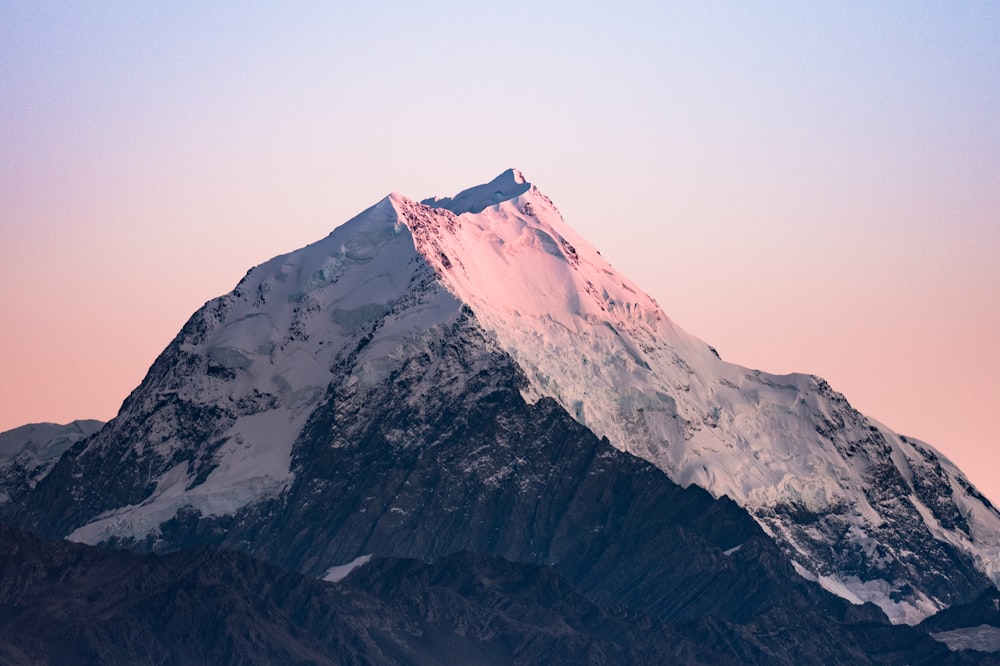
/// caption
{#fig﹕mountain} - Aoraki / Mount Cook, New Zealand
///
@Fig﹕mountain is awesome!

Figure 1 - Aoraki / Mount Cook, New Zealand
Figure 1 is awesome!
Tables
| Name  | Score |
| :---- | ----: |
| Alice |    95 |
| Bob   |    87 |


/// caption | <
{#tbl﹕scores} - List of scores
///

@Tbl﹕scores lists the final scores.
Table 2 - List of scores
| Name | Score |
|---|---|
| Alice | 95 |
| Bob | 87 |
Table 2 lists the final scores.
Math
It can be paired with admonitions to get a latex-like experience.
!!! note "{#th﹕dominated_convergence} (Lebesgue's dominated convergence theorem)"
    Let $(f_n)_{n\in\NN}$ be a sequence of complex-valued measurable functions on a measure space $(S,\Sigma,\mu)$. Suppose that the sequence converges pointwise to a function $f$ i.e.

    $$
    \lim _{n\to \infty }f_{n}(x)=f(x)
    $$

    exists for every $x\in S$. Assume moreover that the sequence $f_{n}$ is dominated by some integrable function $g$ in the sense that

    $$
    |f_{n}(x)|\leq g(x)
    $$

    for all points $x\in S$ and all $n\in\NN$. Then $f_n$, $f$ are integrable and

    $$
    \lim _{n\to \infty}\int_{S}f_{n}\,d\mu =\int _{S}\lim _{n\to \infty }f_{n}d\mu =\int _{S}f\,d\mu
    $$
Theorem 1 (Lebesgue's dominated convergence theorem)
Let \((f_n)_{n\in\NN}\) be a sequence of complex-valued measurable functions on a measure space \((S,\Sigma,\mu)\). Suppose that the sequence converges pointwise to a function \(f\) i.e.
exists for every \(x\in S\). Assume moreover that the sequence \(f_{n}\) is dominated by some integrable function \(g\) in the sense that
for all points \(x\in S\) and all \(n\in\NN\). Then \(f_n\), \(f\) are integrable and
The theorem 1 gives a mild sufficient condition under which limits and integrals of a sequence of functions can be interchanged.